Horse Head Realistic Animal Portrait
First Impression: Elegant, Timeless, and Professionally Refined
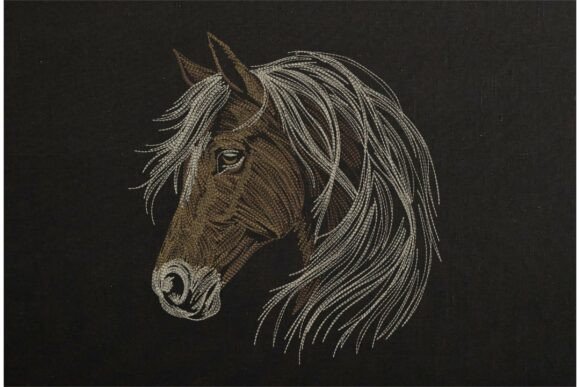
As an embroidery designer who’s developed hundreds of designs for small business merch—think boutique aprons, café caps, florist totes, and pet brand patches—I immediately recognize the quiet authority in Horse Head Realistic Animal Portrait. The title alone signals intentionality: “realistic” suggests fidelity to form, “long-stitch style” hints at fluidity and dimension, and “elegant” isn’t just decorative—it’s strategic. This isn’t a cartoonish or stylized horse; it’s a confident, graceful portrait that reads as premium, classic, and quietly bold. For a small business owner choosing a logo alternative—or a complementary emblem—it conveys craftsmanship, care, and visual maturity without feeling stiff or corporate.
Where It Shines in Real Business Use
Horse Head Realistic Animal Portrait excels where subtlety and sophistication matter most. On an embroidered patch sewn onto a linen apron for a handmade soap studio? It adds artisanal weight. As a chest accent on staff uniforms for a countryside bakery or equestrian-themed gift shop? It reinforces local charm and authenticity. On a structured cap front for a boutique florist offering “wildflower & horsehair” bouquets? Its lifelike line texture translates beautifully into wearable storytelling.
For tote bag design, this machine embroidery design holds presence without overwhelming—especially when paired with minimal typography (e.g., “Est. 2021” or a small business name in clean sans-serif). As a sleeve detail on work shirts for a creative studio or pet wellness brand, its realistic flow echoes movement and care—key emotional cues for customer trust. And because it’s built for long-stitch realism—not flat fill—it adapts well to printable mockups used for Etsy listings, wholesale pitch decks, or client presentations.
It also works powerfully as a branded product add-on: think leather keychains, woven labels for handmade goods, or even stitched accents on packaging sleeves for small-batch candles or herbal teas. In each case, Horse Head Realistic Animal Portrait elevates perceived value—not through flash, but through consistent, tactile quality.
Use With Intention: Where Caution Applies
While elegant, this design demands thoughtful placement. Its fine line texture and realistic detail mean it doesn’t scale down invisibly. Below 2.5 inches in width—especially on curved cap fronts or tiny pocket patches—the delicate contours may blur or lose definition. High stitch density (implied by “detailed” and “fine line texture”) can also challenge lightweight fabrics like unlined cotton poplin or textured burlap unless stabilized properly.
On dark uniforms—navy chef coats, charcoal aprons, or black caps—thread color contrast becomes critical. A single-color version in ecru or heather gray may read softly; testing in black and white first is non-negotiable. Likewise, avoid placing it directly over seams, darts, or high-flex zones (like elbow areas) without reinforcing stabilizer—movement + dense stitching = potential puckering.
If you’re integrating Horse Head Realistic Animal Portrait into a broader set of design assets—say, alongside a wordmark or icon suite—confirm visual consistency: Does its realism harmonize with your other embroidery file styles? Does it hold equal visual weight at the same size? These checks prevent mismatched branding across custom apparel, patches, and digital mockups.
Brand Identity Impact: More Than Just a Logo Alternative
This isn’t just decoration—it’s brand language in thread. For small businesses rooted in nature, heritage, or quiet confidence (a horse sanctuary gift shop, a slow-living ceramics studio, a vintage-inspired saddle maker), Horse Head Realistic Animal Portrait deepens recognition without shouting. Customers subconsciously associate its grace with reliability and attention to detail—traits that build trust faster than slogans ever could.
When repeated across touchpoints—apron embroidery, cap embroidery, tote bag design, and even printed hang tags—the design creates cohesive visual rhythm. That consistency tells customers: “This business knows what it stands for—and executes it with care.” For Etsy sellers and handmade brands, that perception directly influences buyer engagement, repeat purchases, and organic social sharing.
Practical Embroidery Designer Notes for Small Business Use
- Always test in black and white first—to assess contrast, balance, and silhouette clarity before committing to thread colors.
- Check performance at target patch size—especially if using for uniform pockets, cap backs, or boutique merchandise labels.
- Review thread color contrast carefully on your actual fabric swatches—not just screen previews.
- Inspect spacing between fine lines; tight areas may require digitizing tweaks for optimal stitch formation on commercial embroidery machines.
- Confirm hoop size compatibility with your embroidery machine and intended application (e.g., cap frames vs. flat hoops).
- Test on real fabric with proper stabilizer—especially for textured or stretchy materials common in small business merch.
- Create a physical or printable mockup for client approval before full production runs.
- Compare beside existing design assets to ensure tonal and stylistic alignment across your brand system.
- Verify commercial licensing before using Horse Head Realistic Animal Portrait for resale items, wholesale orders, or permanent branded products.
Ultimately, Horse Head Realistic Animal Portrait isn’t just another embroidery file—it’s a versatile, emotionally resonant asset for small businesses building identity through tangible craft. Whether you're a solo embroiderer fulfilling Etsy orders, a boutique owner sourcing custom apparel, or a product designer curating design assets for handmade brands, this machine embroidery design delivers quiet authority, consistent execution, and real-world flexibility—if approached with intention.