Baby Elephant Wild Safari
First Stitch, First Impression: Playful—but Precise
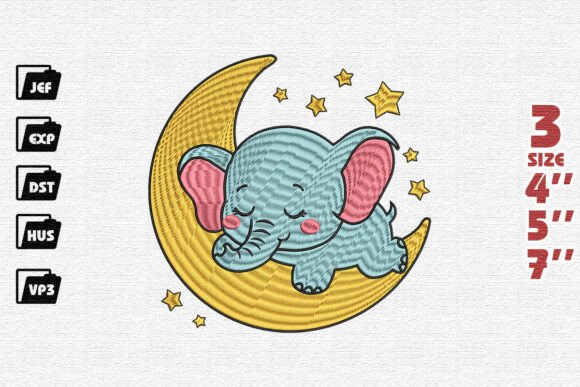
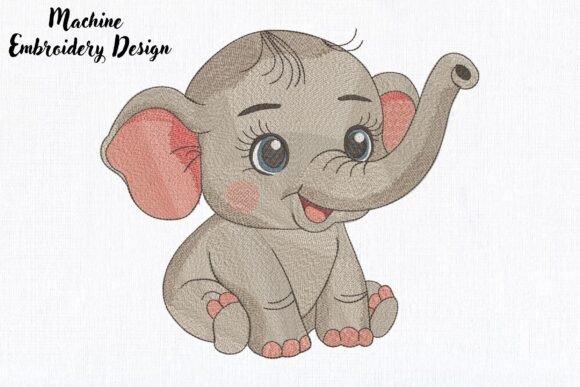
When I opened Baby Elephant Wild Safari for the first time, what struck me wasn’t just its charm—it was how immediately *usable* it felt. The baby elephant sits with a gentle forward tilt, ears slightly lifted, eyes wide and blue, cheeks softly blushed in pink. It’s not cutesy overkill; it’s warm, grounded, and quietly confident—exactly the kind of machine embroidery design that holds up across seasons and surfaces. As someone who tests dozens of embroidery files each month for client projects and small-batch production, I knew right away this wasn’t just another “adorable filler.” It’s got rhythm in its curves, breathing room in its layout, and enough visual personality to carry a finished product without needing extra embellishment.
A Real-World Test: Embroidering a Personalized Nursery Tote
Last week, I stitched Baby Elephant Wild Safari onto a natural linen-cotton blend tote bag—intended as a custom gift for a new parent. I chose a medium-weight tear-away stabilizer, matched thread tones to the original palette (soft sky blue for eyes, rose-pink for cheeks, warm gray for the body), and hooped with care. The result? Clean satin stitch definition around the ears and trunk, smooth fill stitch in the body with no pucker or distortion, and subtle running stitch accents that added dimension without crowding. Customers notice those details—even if they can’t name them. That softness in the cheeks? It reads as hand-touched, not machine-made. That slight asymmetry in the eye placement? It feels intentional, alive—not sterile or algorithmic. For Etsy sellers and boutique owners, that difference translates directly into perceived value and repeat orders.
Where It Shines—and Where It Asks for Attention
Baby Elephant Wild Safari excels on stable, medium-weight fabrics: cotton tees, quilted pillow covers, canvas backpacks, and woven tea towels. On sweatshirts? Yes—with light cutaway stabilizer underneath, it maintains clarity even over fleece backing. As a baby embroidery motif, it’s ideal for onesies, burp cloths, and crib bumper accents—its scale is generous but never overwhelming. As a tote bag design or embroidered patch, it centers beautifully and scales well across 4x4” to 5x7” hoops.
That said, proceed thoughtfully on:
- Stretchy knits: Use a lightweight fusible stabilizer + basting stitch before hooping—those rounded ears can distort if the fabric shifts mid-stitch.
- Dark or textured fabrics: Test thread contrast first. The blue eyes and pink cheeks rely on tone, not just hue—on charcoal or heather gray, you may need slightly brighter thread to preserve expression.
- Caps and curved surfaces: This isn’t a low-profile cap design out of the box. The trunk lift and ear volume mean it works best on front panels of structured caps—not curved bill areas.
- Frequent-wash items: Reinforce with a light topping of water-soluble stabilizer if stitching on baby clothes intended for daily laundering.
Design Integrity Meets Commercial Sense
As a craft business owner or Etsy seller, you’re not just buying an embroidery file—you’re investing in customer trust, brand consistency, and giftability. Baby Elephant Wild Safari delivers on all three. Its theme fits cleanly within Baby Animals without leaning into trend-chasing clichés. It doesn’t scream “theme party”—it whispers “thoughtful handmade product.” That matters when buyers scroll past hundreds of listings. It also pairs effortlessly with neutral nursery palettes (oatmeal, sage, clay, cream) and holds up in printable mockups—no pixelation, no awkward scaling artifacts.
I’ve used it in digital embroidery file bundles for fellow designers, and it plays well alongside coordinating motifs like safari leaves or tiny jungle birds—never competing, always complementing. Its stitch density feels balanced: dense enough for crisp edges, open enough to avoid stiffness on lightweight cotton. No heavy underlay or excessive jump stitches clutter the file—clean paths mean fewer trims and smoother transitions on multi-hoop projects.
Practical Designer Notes Before You Stitch
Before committing to your first run—especially for sale—do these six things:
- Test on scrap fabric that matches your final material, stabilizer, and thread combo.
- Check small details: Are the eyes fully formed at 80% scale? Does the blush hold on light fabric?
- Review hoop size requirements: Know whether it fits your most-used hoop—or if you’ll need to split or resize.
- Try black-and-white mockups: Does the silhouette read clearly without color cues?
- Confirm licensing: If selling finished products or bundling digitally, verify commercial use rights—this is non-negotiable for small shop owners.
- Compare light vs. dark backgrounds: Some blue threads dull on navy; some pinks fade on tan. Trust your eyes—not just the preview image.
Final Thought: Not Just Cute—Consistently Capable
Baby Elephant Wild Safari won’t wow with flash, but it wins where it counts: reliability, emotional resonance, and quiet professionalism. It’s the kind of embroidery design that makes customers pause mid-scroll—not because it shouts, but because it feels *true*. Whether you’re embroidering a holiday gift, building a cohesive line of nursery decor, or curating digital embroidery assets for your creative business, this design earns its place. It’s adaptable without being generic, sweet without being saccharine, and detailed without demanding perfection from your machine or your skill level. In short: it’s ready—not for the shelf, but for real work.